

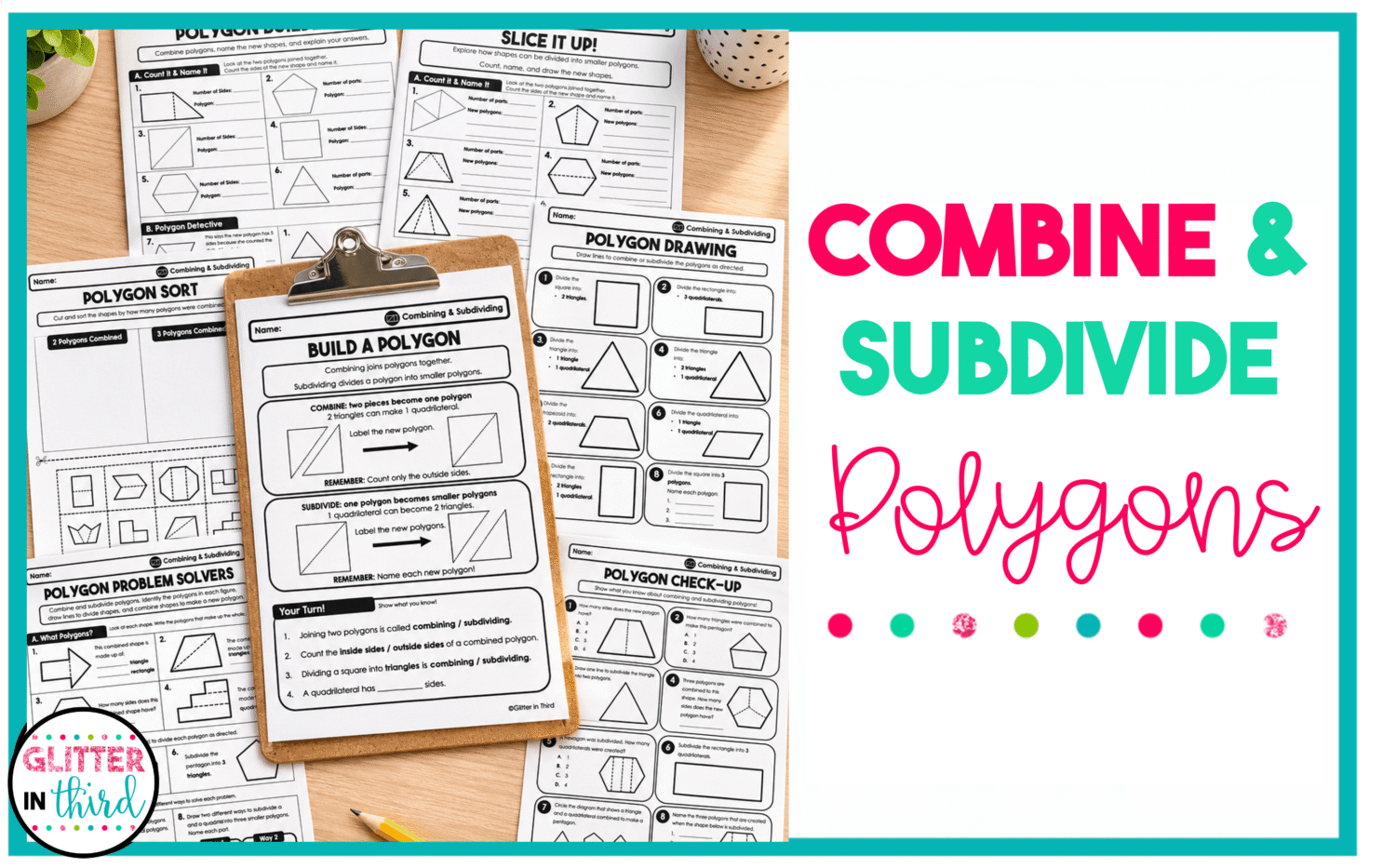
Teaching combining and subdividing polygons in 3rd grade? This is one of those geometry skills that sounds SO easy until you actually start teaching it!
Students might know their triangles, quadrilaterals, and pentagons, but ask them to combine two shapes and name the new polygon? Suddenly, things get a little tricky!
If you’re teaching Virginia SOL 3.MG.4, I’ve got some easy teaching tips, examples, and print-and-go worksheets to help your students practice combining and subdividing polygons!
First, let’s look at what third graders actually need to know.
The 2023 Virginia Math SOL 3.MG.4 includes two important skills:
Basically, students need to understand how smaller shapes can make a bigger shape and how one big shape can be divided into smaller ones.
Sounds simple enough, right? Let’s look at how to teach it!
When students combine polygons, they’re putting shapes together to make a new polygon.
For example, two triangles can be put together to make a quadrilateral. Or you can put a triangle on top of a square to make a pentagon that looks like a little house!
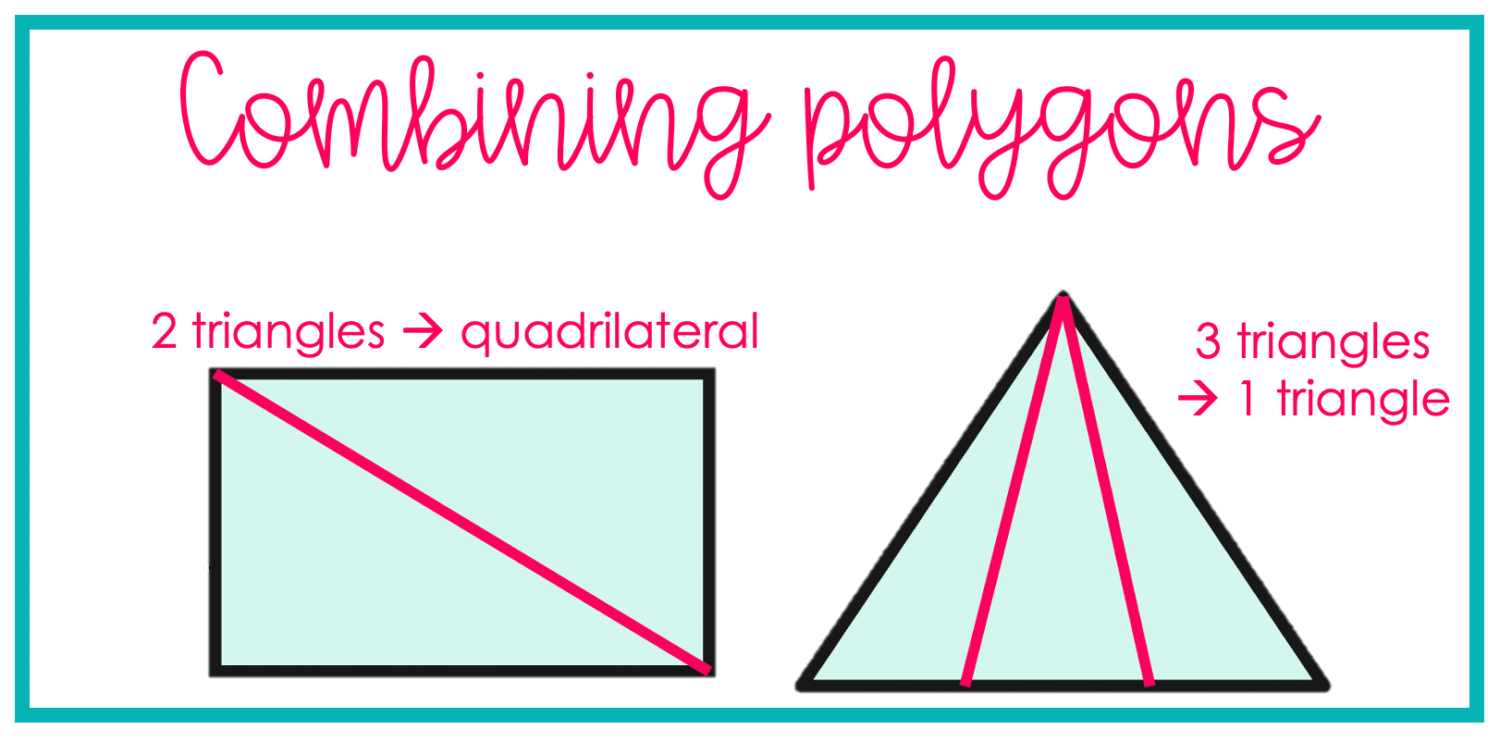
The tricky part? Students need to count the OUTSIDE sides of the new shape.
I would definitely spend some extra time on this because it’s easy for kids to count the lines inside the shape too.
One of my favorite ways to help is to have students trace the outside of the combined polygon with a colored pencil. Then they can count the sides and figure out the name of their new polygon.
You can also use pattern blocks! Have students put two or three triangles and quadrilaterals together, trace around their new shape, and name it.
It’s such an easy way to make this skill more hands-on before moving into worksheets!
Now let’s do the opposite!
Instead of putting shapes together, students are subdividing polygons into smaller shapes.
For example, you can draw a diagonal line through a rectangle to create two triangles. Or draw a line straight down the middle to create two smaller quadrilaterals.
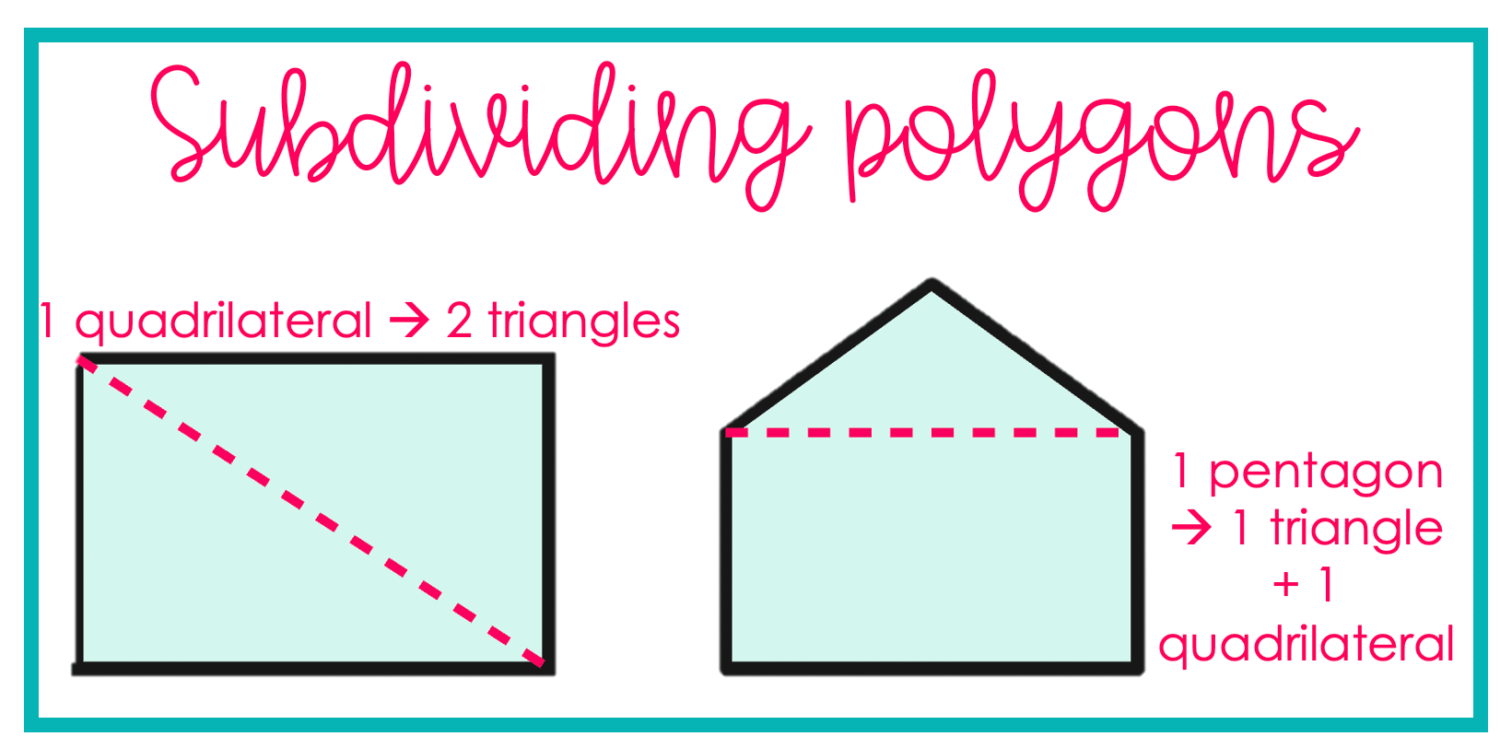
The big thing to remember is that students are only subdividing triangles and quadrilaterals into two or three parts for this SOL (although in my example I used a pentagon- I’m personally a big believer in making sure they can do a skill just a little bit above the SOL skill level! If they can divide a quadrilateral into 2 parts… they can definitely divide a pentagon into 2 parts! Plus it gives them practice from the polygon standard).
And here’s something important: The smaller pieces don’t have to be equal in size!
We’re not teaching equal fractions here. We just want students to understand how a polygon can be divided into smaller polygons.
A really easy activity is to give students a rectangle and ask them to find two different ways to divide it. Then have them name the polygons they made.
You’ll probably get lots of different answers, which makes for a great class discussion!
There are a few things I’d keep an eye on when teaching combining and subdividing polygons.
1. Counting the inside lines
This is probably the biggest one! Remind students that when combining polygons, they only count the outside sides of the new shape.
2. Thinking all polygons have to look a certain way
A quadrilateral doesn’t have to be a square or rectangle! Make sure students practice with irregular shapes and polygons facing different directions.
3. Making too many pieces
When subdividing polygons, remind students to create no more than three parts.
4. Forgetting to name the new polygons
It’s not enough just to draw the lines! Students also need to identify the polygons they created.
A little extra practice with these skills can go a long way!
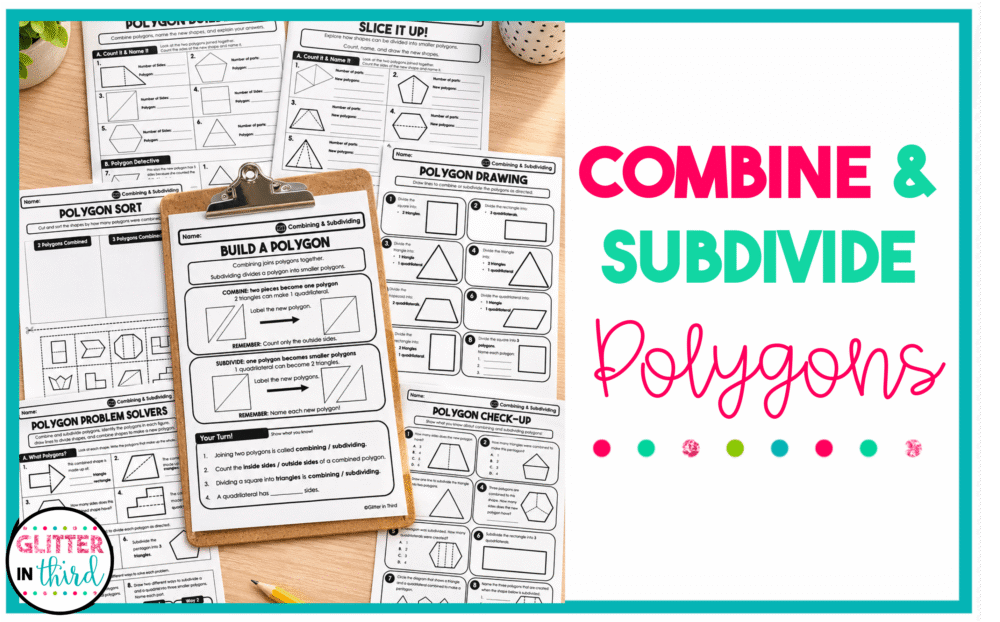
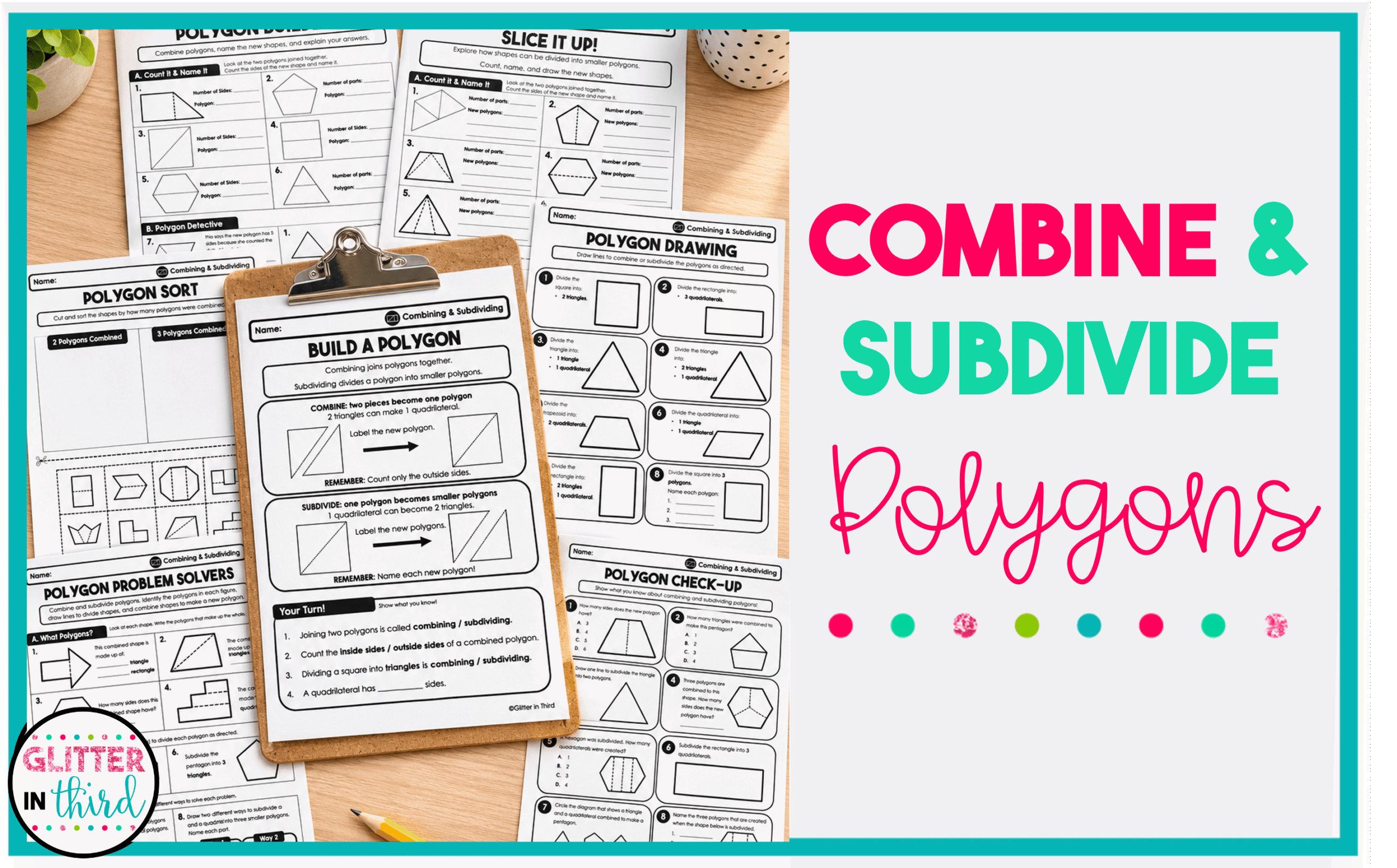
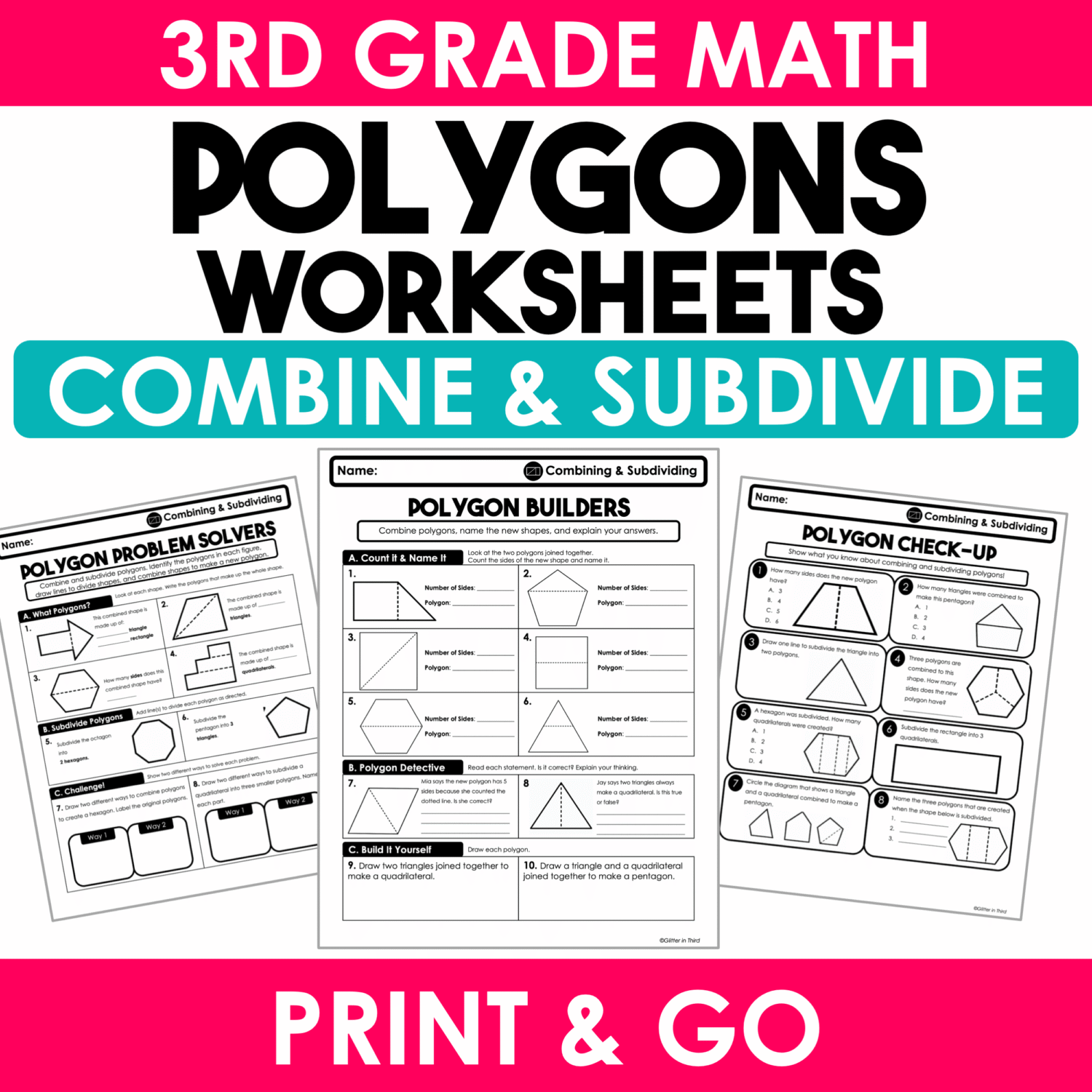
Looking for more practice? These Combining and Subdividing Polygons Worksheets give students no-prep practice counting sides, combining shapes, and subdividing polygons. Perfect for math centers, independent practice, or Virginia SOL review!
Combining and subdividing polygons is one of those skills that really benefits from seeing lots of examples.
Start with pattern blocks or simple drawings, practice tracing those outside sides, and then give students a chance to work through different problems on their own.
And don’t forget to throw in some unusual-looking polygons! We want students recognizing shapes by their sides, not just because they look like the pictures in their math books.
I hope these ideas make teaching combining and subdividing polygons in 3rd grade a little easier!
Happy teaching!