
Teaching Virginia SOL 3.NS.3b and wondering how to explain fractions as a sum of unit fractions? You’re not alone!
With Virginia’s updated 2023 Math Standards of Learning, this fraction skill now has its own specific standard. And while it might seem like we’re making fractions more complicated than necessary, it’s actually pretty simple to teach!
Let’s break down what the standard means and explore easy, hands-on ways to help your third graders understand it.
Virginia’s 2023 Math SOL 3.NS.3b requires students to:
Identify a fraction represented by a model as the sum of unit fractions.
Sounds a little complicated, right?
Fortunately, the actual math is pretty straightforward.
A unit fraction is a fraction with a numerator of 1, such as 1/2, 1/3, or 1/4.
When students represent a fraction as a sum of unit fractions, they’re simply breaking it into smaller pieces with a numerator of 1.
For example:
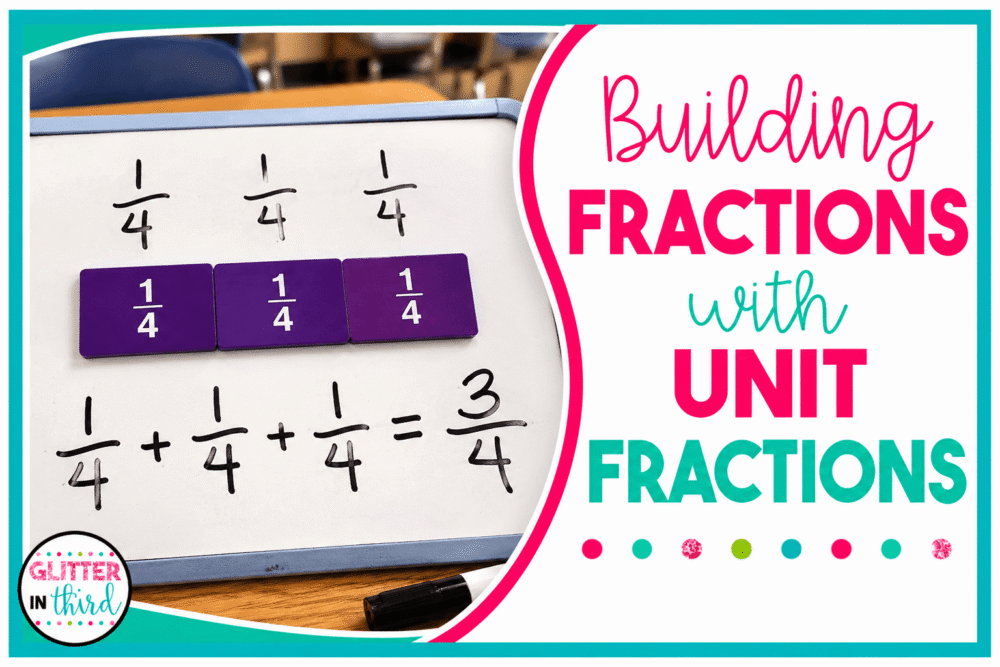
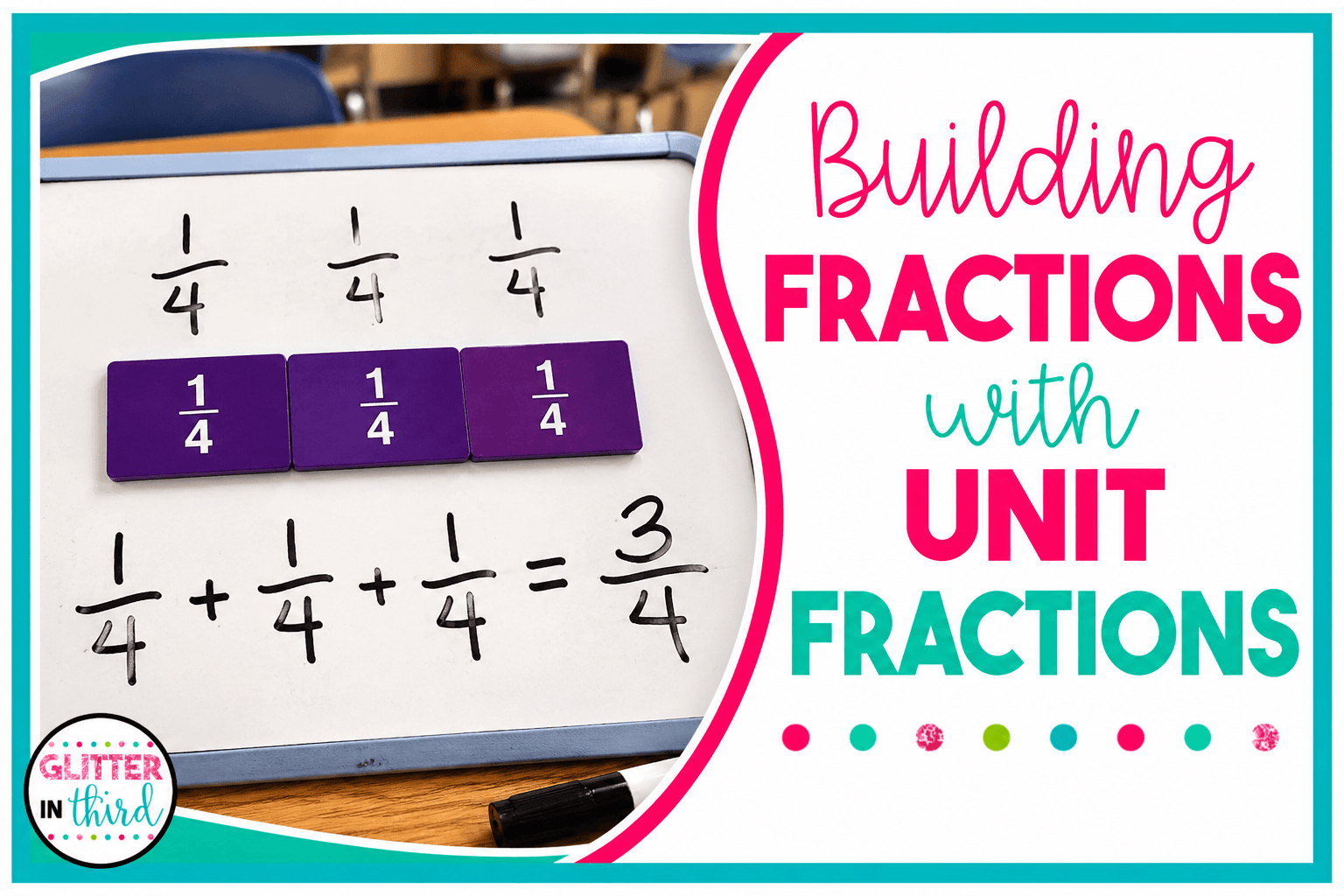
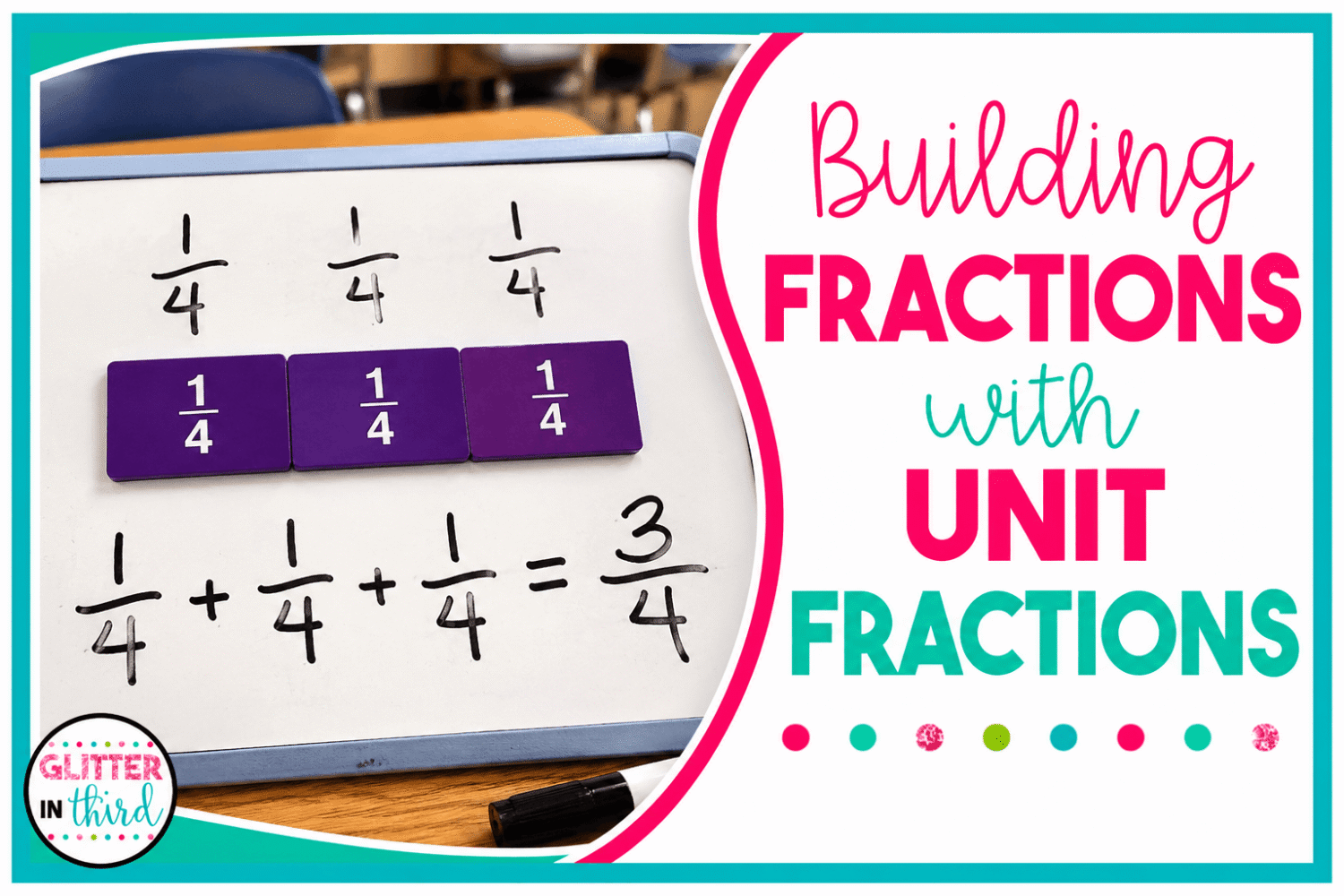
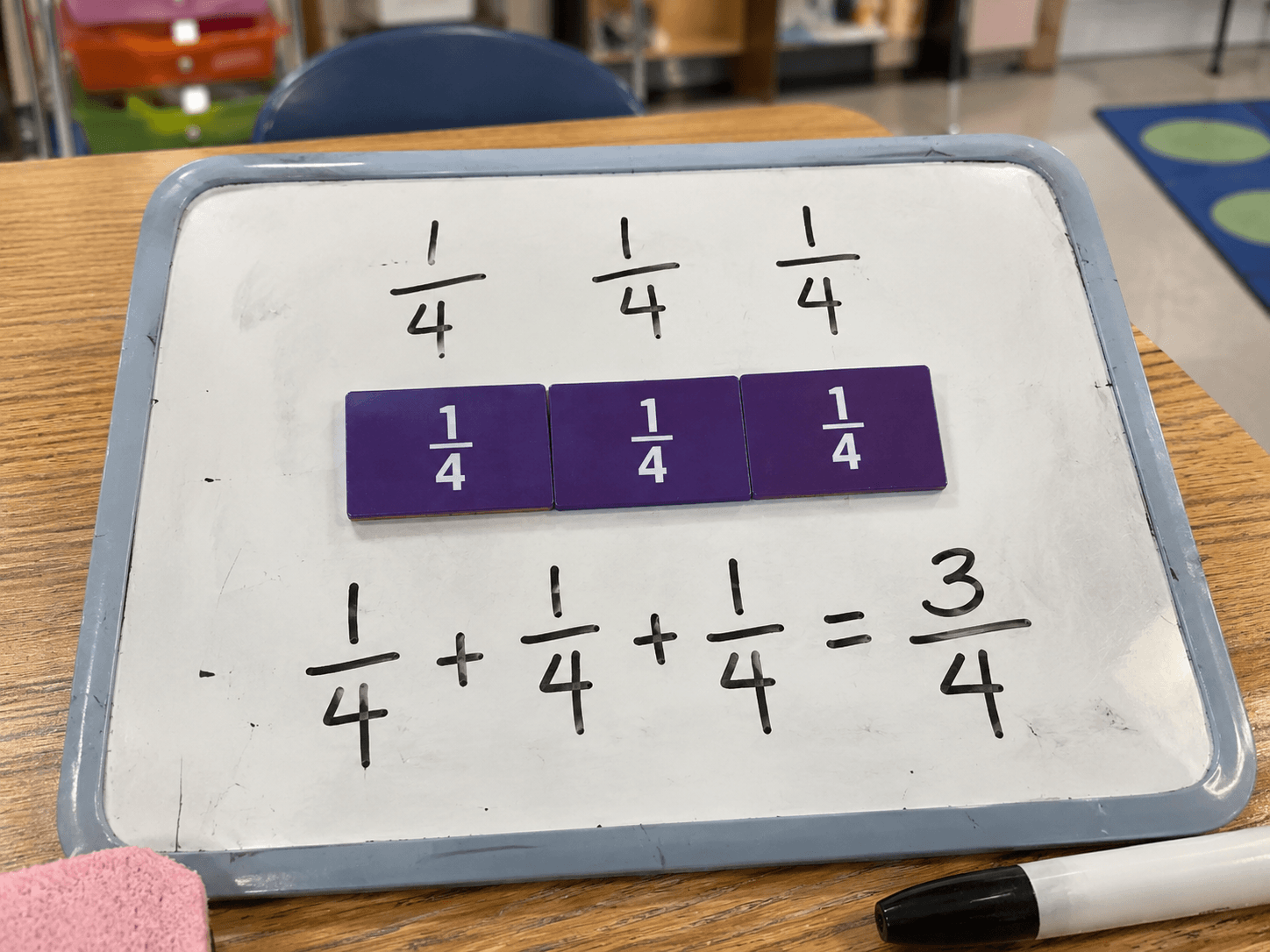
3/4 = 1/4 + 1/4 + 1/4
That’s it!
Instead of looking at 3/4 as one fraction, students recognize that it’s made up of three individual fourths.
Here are a few more examples:
Students use fraction models to visualize these parts and write the corresponding addition equation.
Yes and no!
If you’ve been teaching Virginia math for a while, you may remember that the 2016 standards already included identifying fractions as sums of unit fractions within their instructional expectations.
However, with the 2023 Virginia Math SOL, this skill is now specifically identified as SOL 3.NS.3b.
That makes it an important skill for teachers to address when planning third grade fraction lessons.
And I’ll admit, at first glance, it can feel like we’re making fractions a little more complicated than they need to be!
After all, if students can already recognize that three shaded pieces out of four equal 3/4, why do they also need to write 1/4 + 1/4 + 1/4?
But there is a purpose behind it.
The goal isn’t simply to make students write longer fraction equations. It’s to help them understand that fractions are numbers made up of equal-sized parts.
Once students understand that 3/4 is three copies of 1/4, they’re building a foundation for composing, decomposing, and eventually adding fractions.
The trick is to keep the instruction visual, concrete, and simple rather than turning it into an unnecessarily complicated lesson.
You don’t need an entirely new approach to teach SOL 3.NS.3b. In fact, this skill fits naturally into lessons you’re probably already teaching about fraction models!
Before introducing addition equations, make sure students can identify fractions using shaded shapes, fraction bars, or number lines.
For example, show students a rectangle divided into four equal parts, with three parts shaded.
Ask:
Students should recognize that the model shows 3/4.
Next, have students look at each shaded section individually.
Each shaded piece represents 1/4.
Since there are three shaded pieces, students can write:
1/4 + 1/4 + 1/4 = 3/4
It’s the exact same fraction they’ve already identified, just written in a different way!
This is a great opportunity to reinforce the relationship between numerators, denominators, and equal parts.
Once students understand the concept, give them opportunities to practice using different fraction models.
Try activities where students:
Using visual models helps students see WHY the equations work instead of simply memorizing a pattern.
One thing I wouldn’t do? Turn this into a huge, complicated fraction addition unit!
The focus of SOL 3.NS.3b is identifying a modeled fraction as the sum of unit fractions.
Students don’t need to tackle complicated addition problems with unlike denominators to demonstrate this particular skill.
Keep it simple:
See the fraction → Identify the unit fraction → Write the addition equation.
That’s the skill!
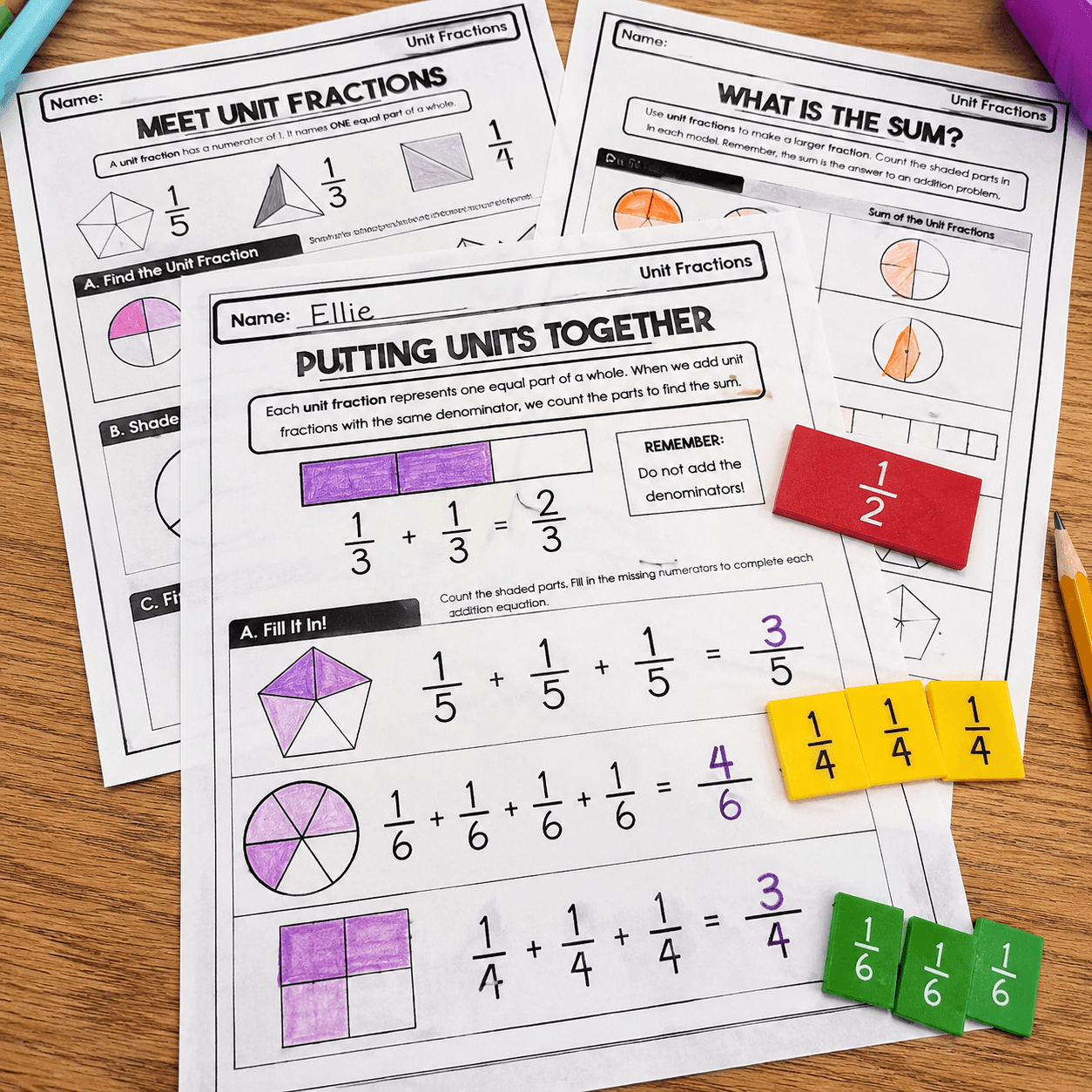
Looking for an easy way to practice Virginia SOL 3.NS.3b without spending hours creating your own fraction models?
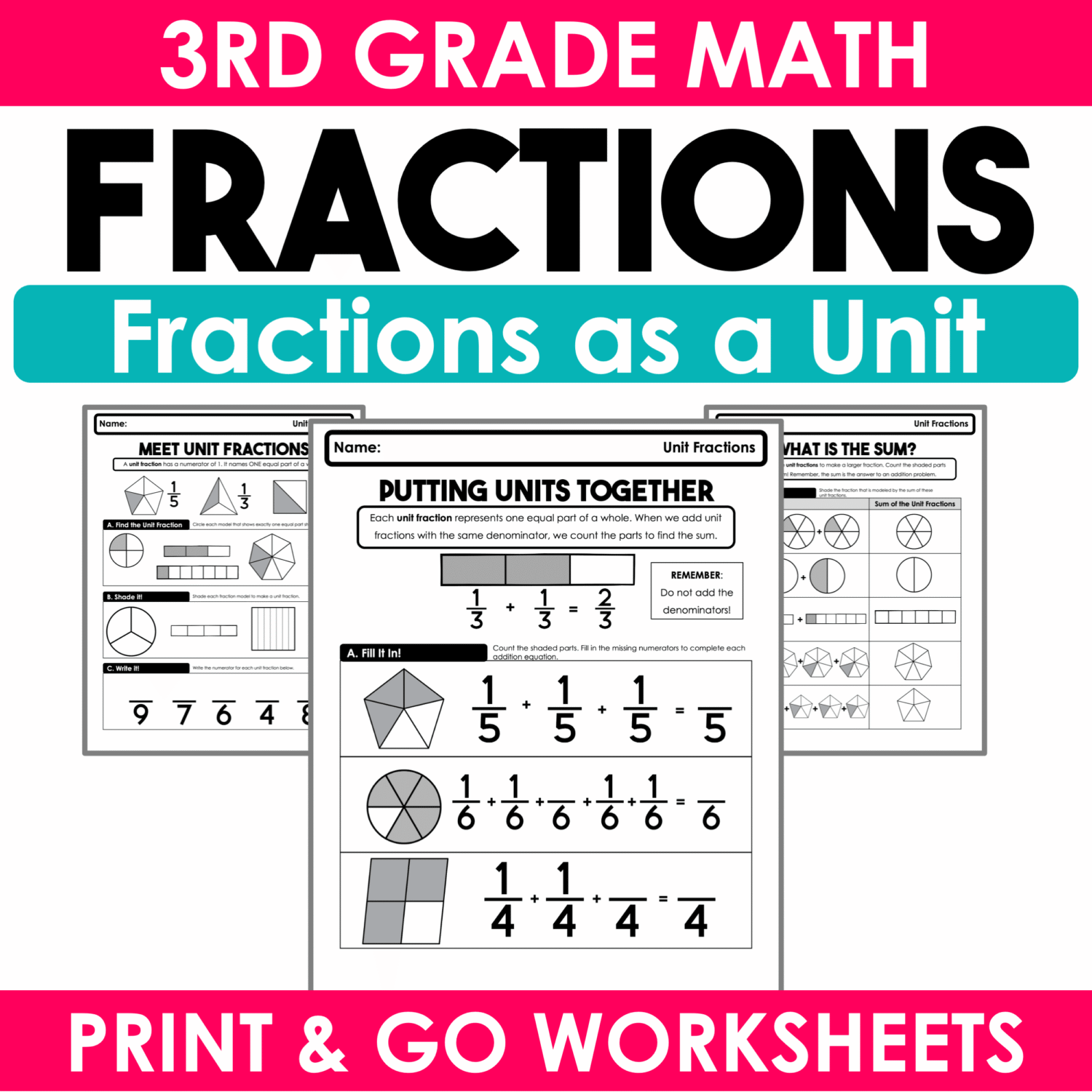
My 3rd Grade Sum of Unit Fractions Worksheets are designed to help students practice this specific Virginia math standard using visual, approachable activities.
These worksheets provide a simple way to reinforce how fractions can be represented as the sum of unit fractions.
They’re a great addition to your fractions unit for independent practice, math review, small groups, or extra reinforcement.
Grab 2 FREE Equivalent Fractions Color-by-Number Worksheets!
Make fraction practice a little more fun with these no-prep activities your 3rd graders will love!

The updated Virginia Math SOL includes several fraction skills under 3.NS.3, including representing fractions with models, identifying sums of unit fractions, and composing and decomposing fractions.
The good news? These skills build on one another, so you don’t have to treat every standard as an entirely separate lesson.
Start with concrete fraction models, build students’ understanding of unit fractions, and gradually introduce the different ways fractions can be represented.
The goal is to help students understand fractions—not just memorize another procedure!
And with the right visual practice, even a standard that initially seems unnecessarily complicated can become a manageable part of your third grade math instruction.
Looking for more ways to teach fractions? Start with my 3rd Grade Representing Fractions Worksheets to help students understand fractions using area, set, and length models. You can also explore my Unit Fractions Worksheets for additional practice before introducing sums of unit fractions.
These skills work together to build a strong foundation for Virginia’s third grade fraction standards!