

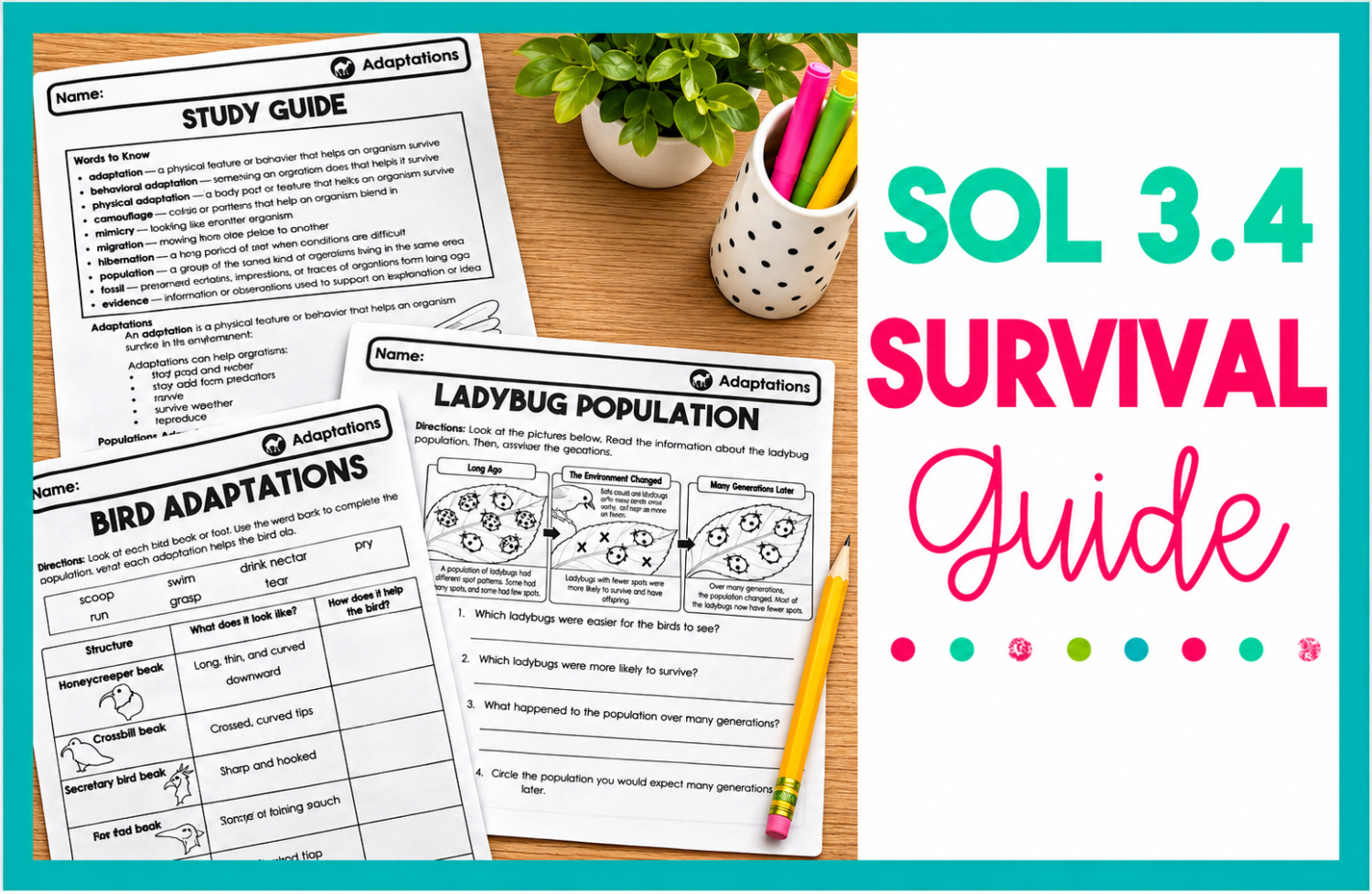
Teaching Virginia Science SOL 3.4? Let’s talk animal adaptations and fossils!
This is one of my favorite 3rd grade science units! Kids LOVE learning about camouflage, mimicry, and all the fascinating ways animals survive.
But SOL 3.4 covers more than just animal adaptations. We’ve also got populations changing over time and fossils to tackle.
Don’t worry, I’ve got you! Let’s break down exactly what you need to teach, along with some easy, engaging activities that’ll make planning this unit a whole lot easier.
Before we start pulling up pictures of chameleons and polar bears, let’s make sure we’re covering what Virginia actually wants students to know!
Three big concepts. My advice? Teach them one at a time. Nobody needs to tackle all of that in one lesson!
This one can be tricky for 3rd graders because we’re talking about changes over MANY generations.
Keep it simple! Imagine a population of green and brown beetles living in a grassy field. The environment changes, and the grass turns brown.
Which beetles will be harder for predators to spot?
The brown ones!
Explain that beetles with helpful inherited traits are more likely to survive and reproduce. Over many generations, those traits may become more common in the population.
The big takeaway? Individual animals don’t magically change their bodies when their environment changes.
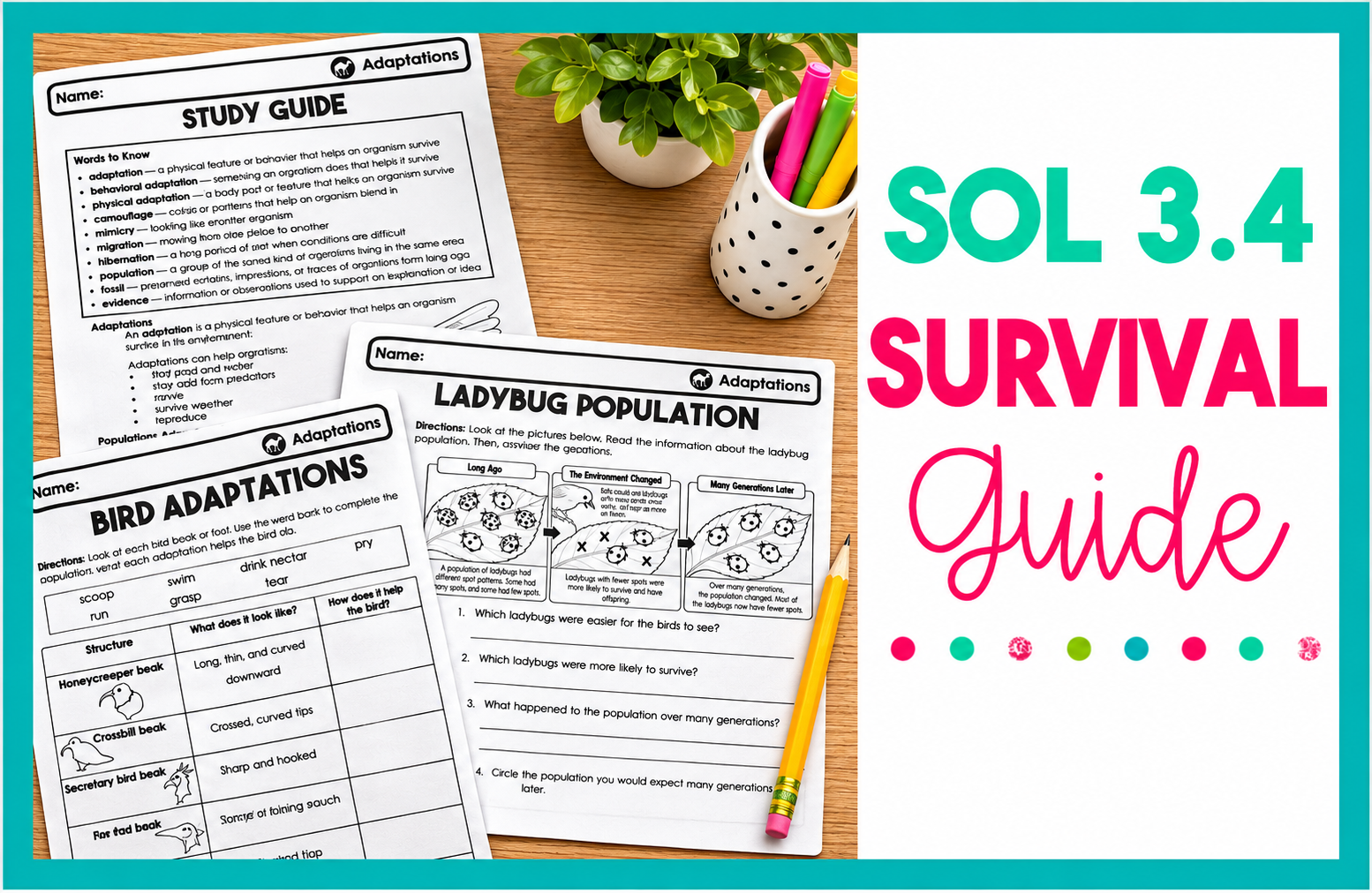
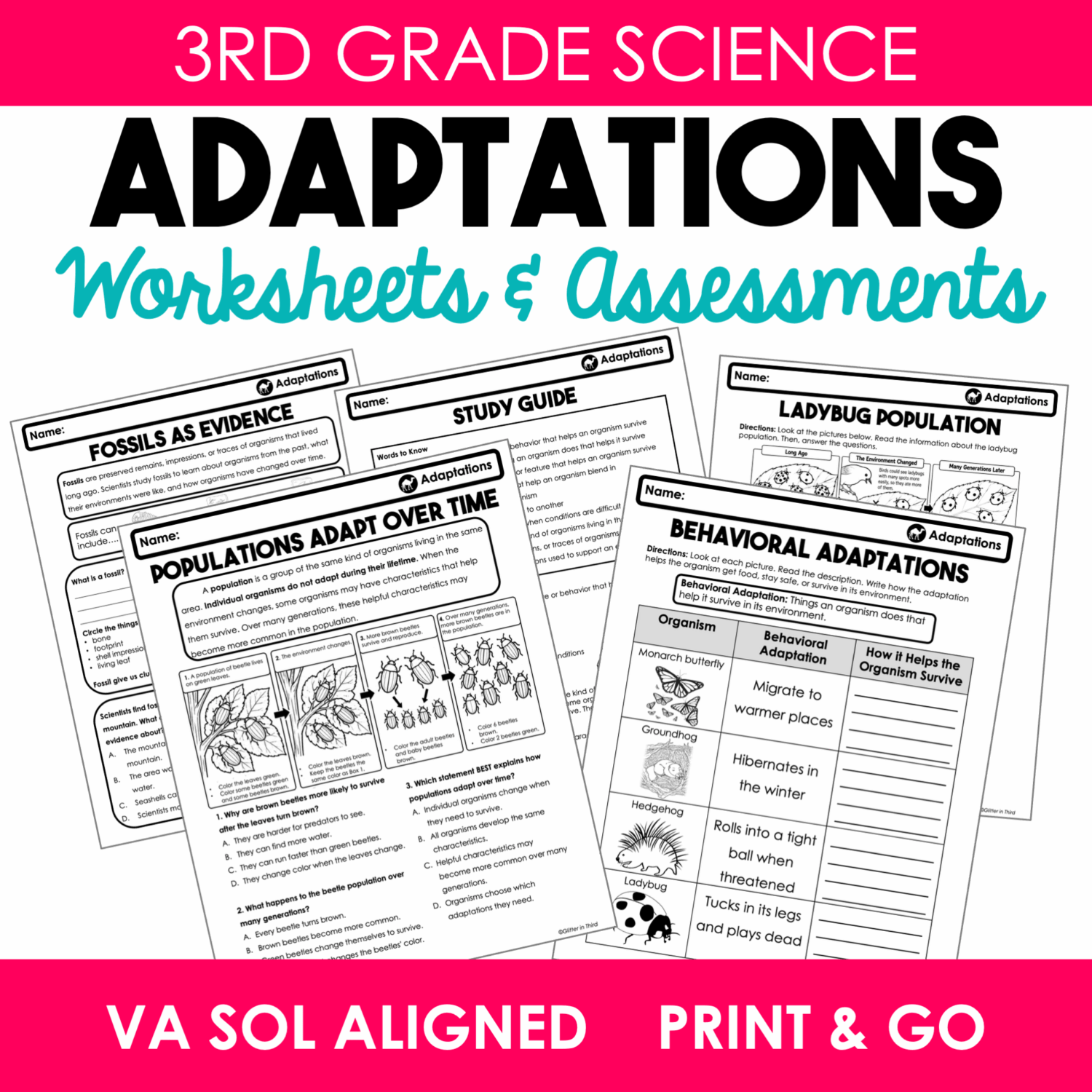
My Virginia SOL 3.4 Worksheets include practice activities to reinforce this concept.
Now THIS is where the fun really starts.
Students usually love learning about physical and behavioral adaptations because there are so many interesting examples.
Start by teaching the difference:
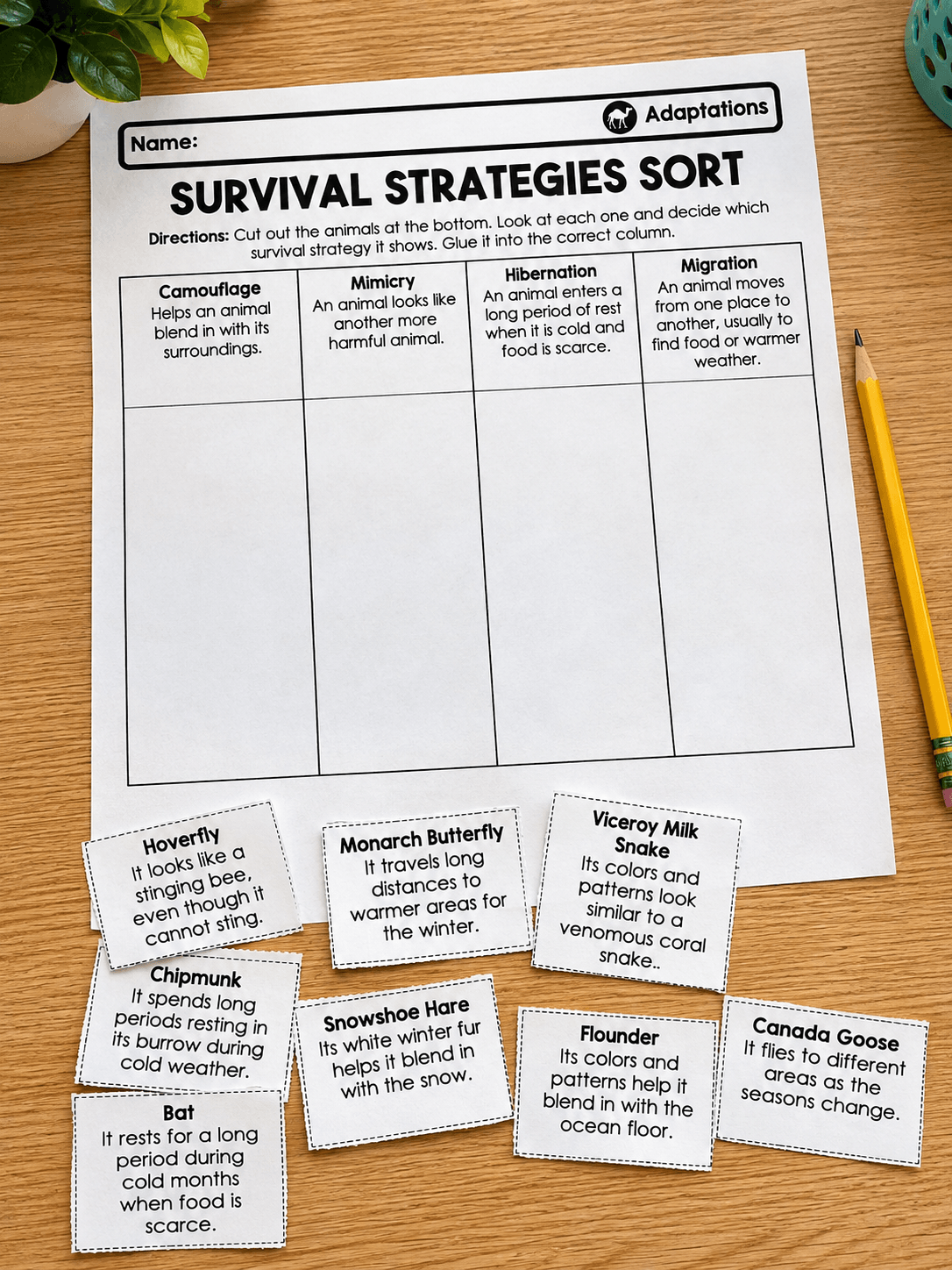
I like starting with a simple sorting activity where students decide whether an adaptation is physical or behavioral.
Then move into specific adaptations, including camouflage, mimicry, migration, and hibernation.
My favorite teaching trick? Show students a picture of a camouflaged animal and ask them to find it.
Instant engagement. You’re welcome.
Once students understand the vocabulary, give them opportunities to apply it. My Animal Adaptations Worksheets include focused practice on structural and behavioral adaptations, bird beaks and feet, camouflage, mimicry, migration, and hibernation.
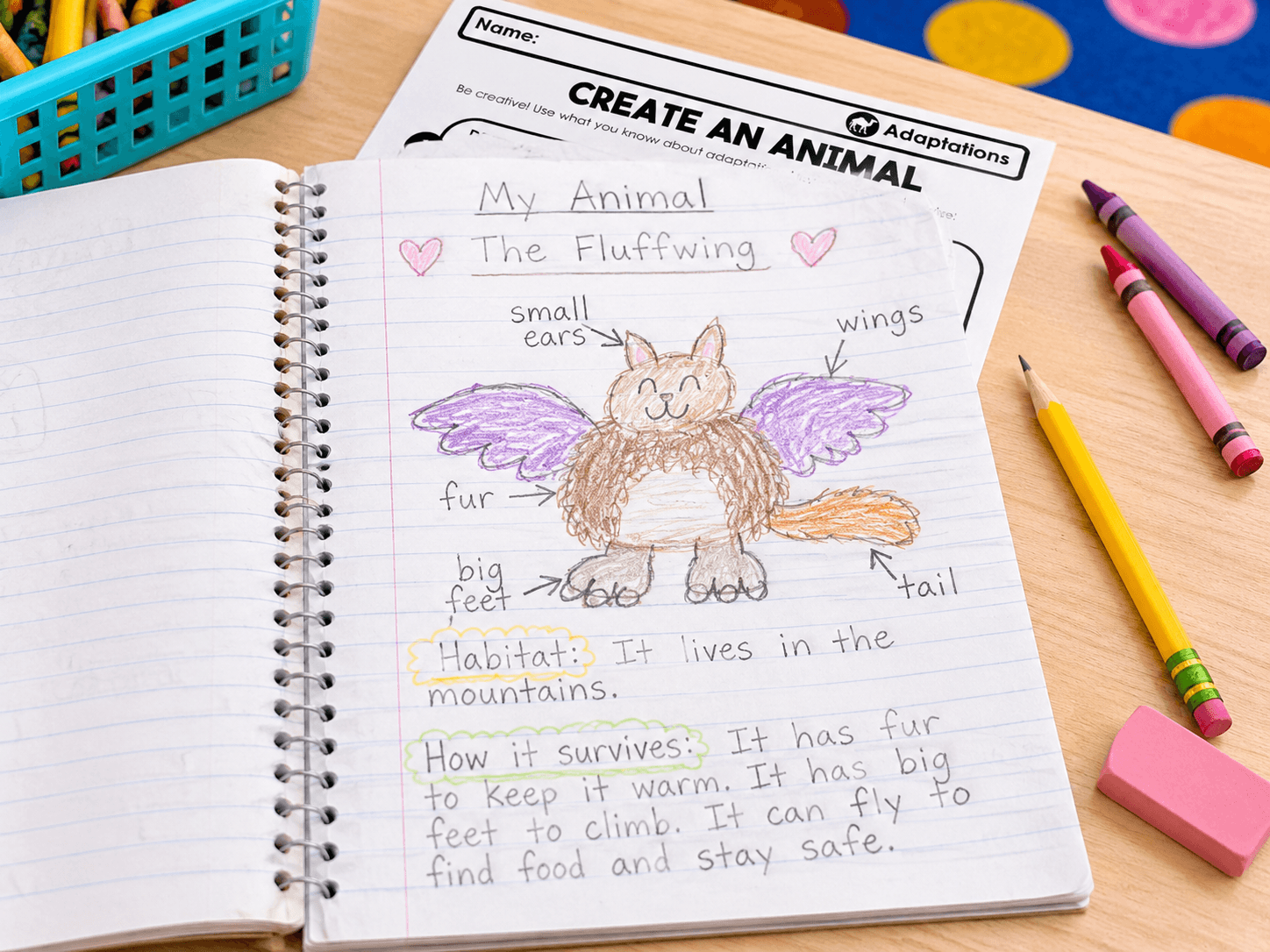
After learning about adaptations, let students create their own animals!
Have them choose an environment and design an animal with physical features and behaviors that help it survive.
But here’s the catch: They have to EXPLAIN their adaptations.
Not just “My animal has purple wings because purple is my favorite color.”
Sorry, friend. We’re doing science here.
My worksheet packet includes a two-page Design an Animal activity that gets students thinking creatively while applying what they’ve learned.
And the drawings? Always entertaining.
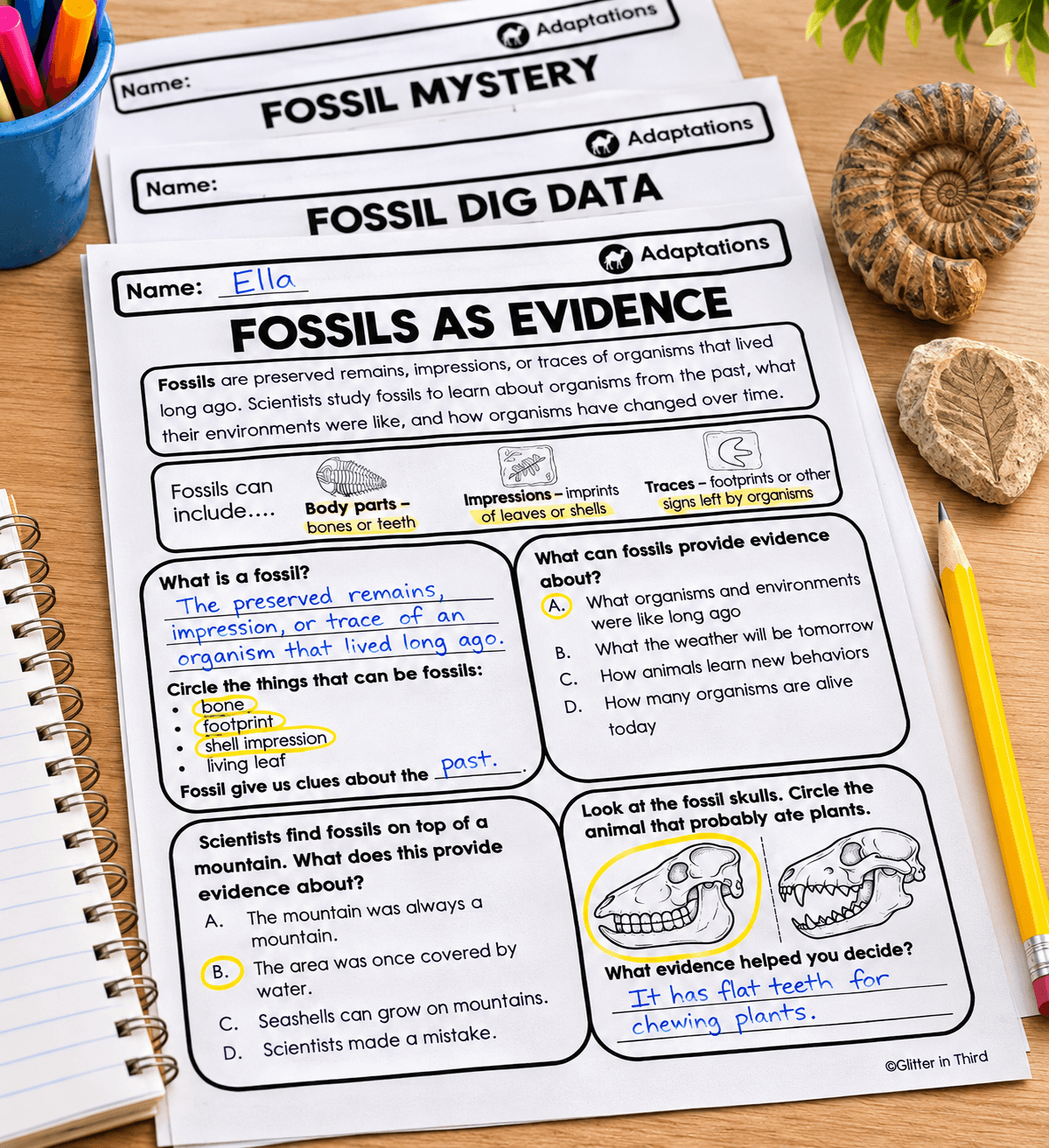
Last up: fossils!
Students need to understand that fossils provide evidence about organisms and environments from long ago.
My favorite approach? Show students a fossil and ask:
Simple questions that get students thinking like scientists!
If you have extra time, make fossil impressions with modeling clay and shells. If not, pictures, discussions, and some practice worksheets work just fine.
No need to turn every science lesson into a giant craft project!
My Virginia SOL 3.4 Worksheet Pack includes fossil activities that help students practice using evidence to learn about the past.
You’ve taught the concepts, practiced the vocabulary, and talked about camouflage approximately a thousand times. Time to see what stuck!
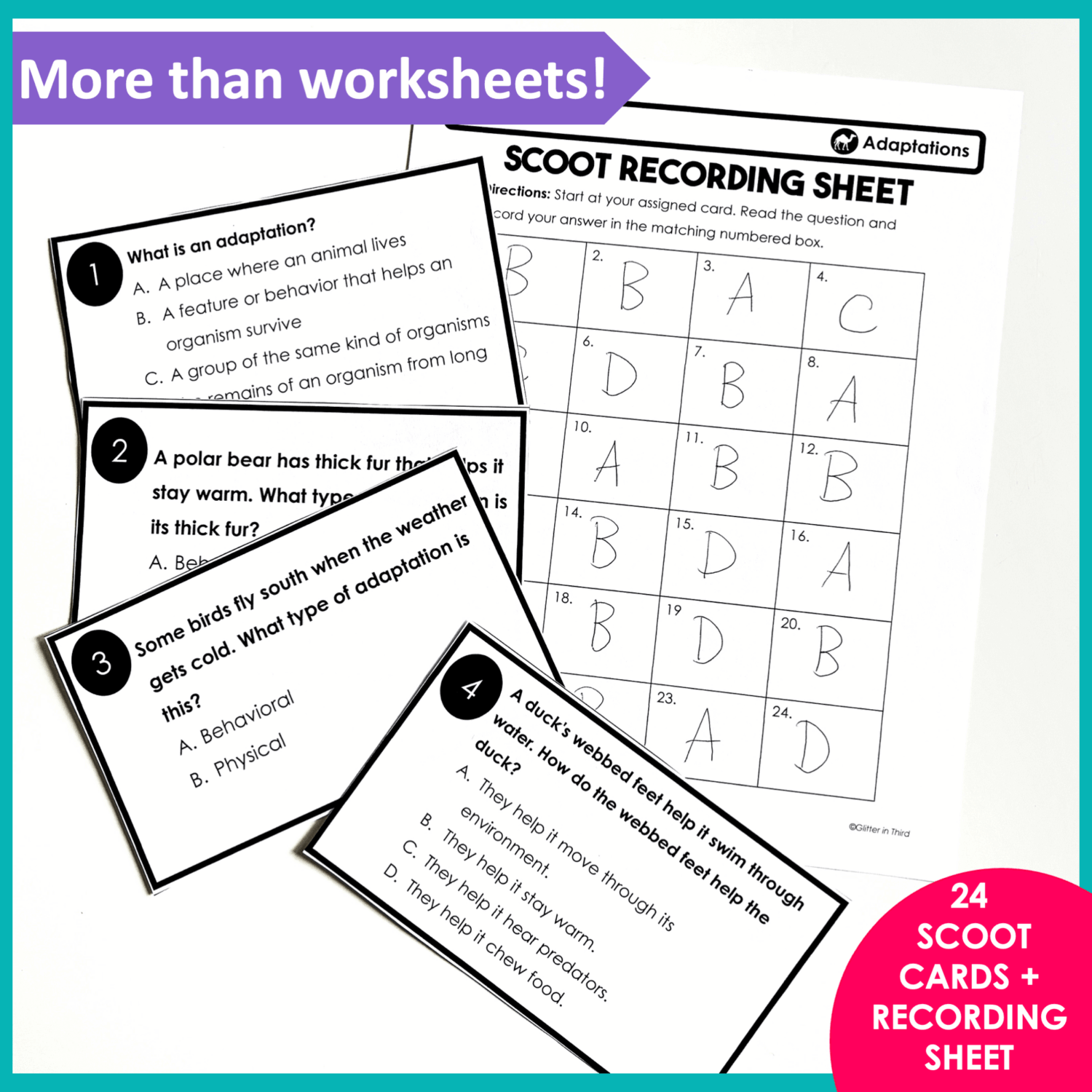
I love using Scoot to review! Just place task cards around the room and have students rotate through, recording their answers as they go. Science review AND movement? Win-win!
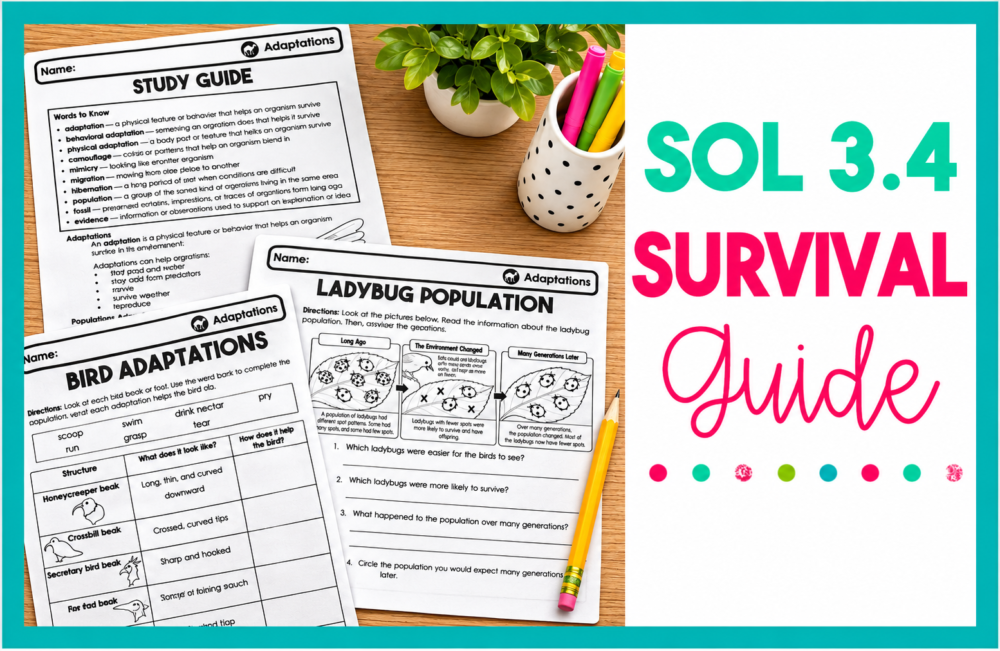
My worksheet pack includes a 24-card Scoot game, recording sheet, study guide, and assessment. Everything you need to wrap up SOL 3.4 without spending your Sunday night creating review materials!
I love teaching science. Spending my Sunday night hunting down worksheets, review activities, and assessments? Not so much.
That’s why I created my Animal Adaptations & Fossils Worksheets!
With 24 printable pages, a creative animal design activity, Scoot game, study guide, and assessment, you’ve got the practice and review covered.
Less prep, more science. Just how I like it!
Happy teaching!