Description
Rights and Responsibilities of Citizens Activities for Google Classroom Digital Resources
Help your students understand what it means to be a citizen with this interactive digital resource for Google Slides™. Through editable reading passages and drag-and-drop activities, students explore the difference between rights and responsibilities, what it looks like to contribute to their school, community, state, and country, and how basic freedoms like speech and religion are protected. This is the perfect no-prep civics resource for introducing key concepts like citizenship, voting, and the First Amendment in a way that’s age-appropriate and easy to understand.
What Digital Rights and Responsibilities of Citizens Activities are Included?
This product includes:
- Introduction
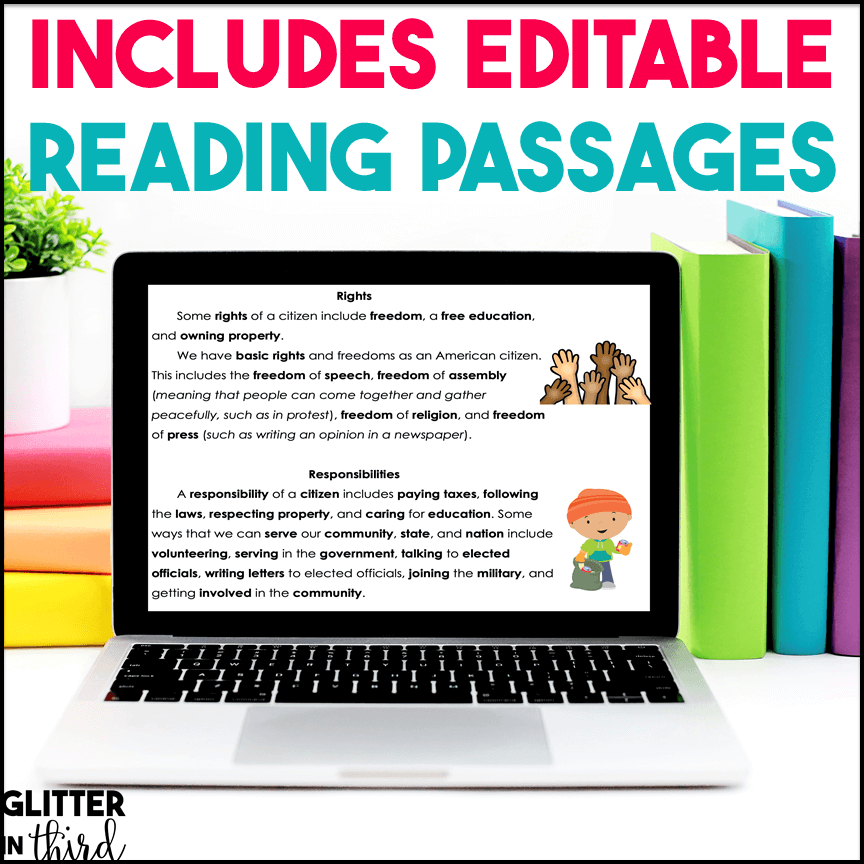
- Editable reading passages
- Drag-&-drop: match the definitions to the vocabulary word (citizen, rights, responsibilities)
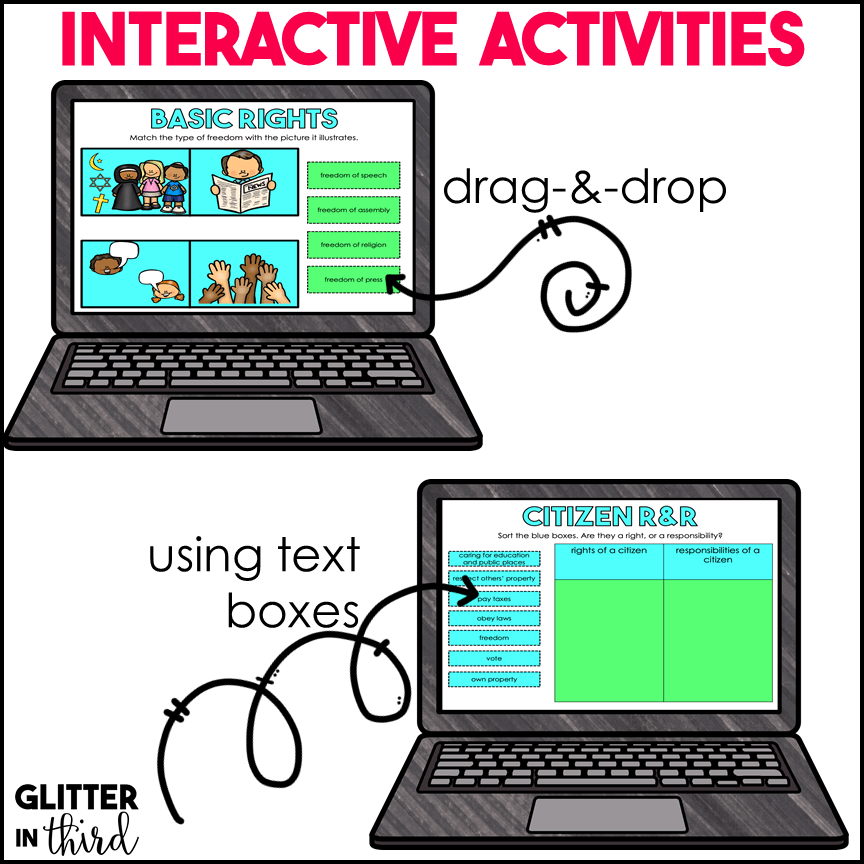
- Drag-&-drop: sort the citizen rights & responsibilities
- Drag-&-drop: sort the student rights & responsibilities
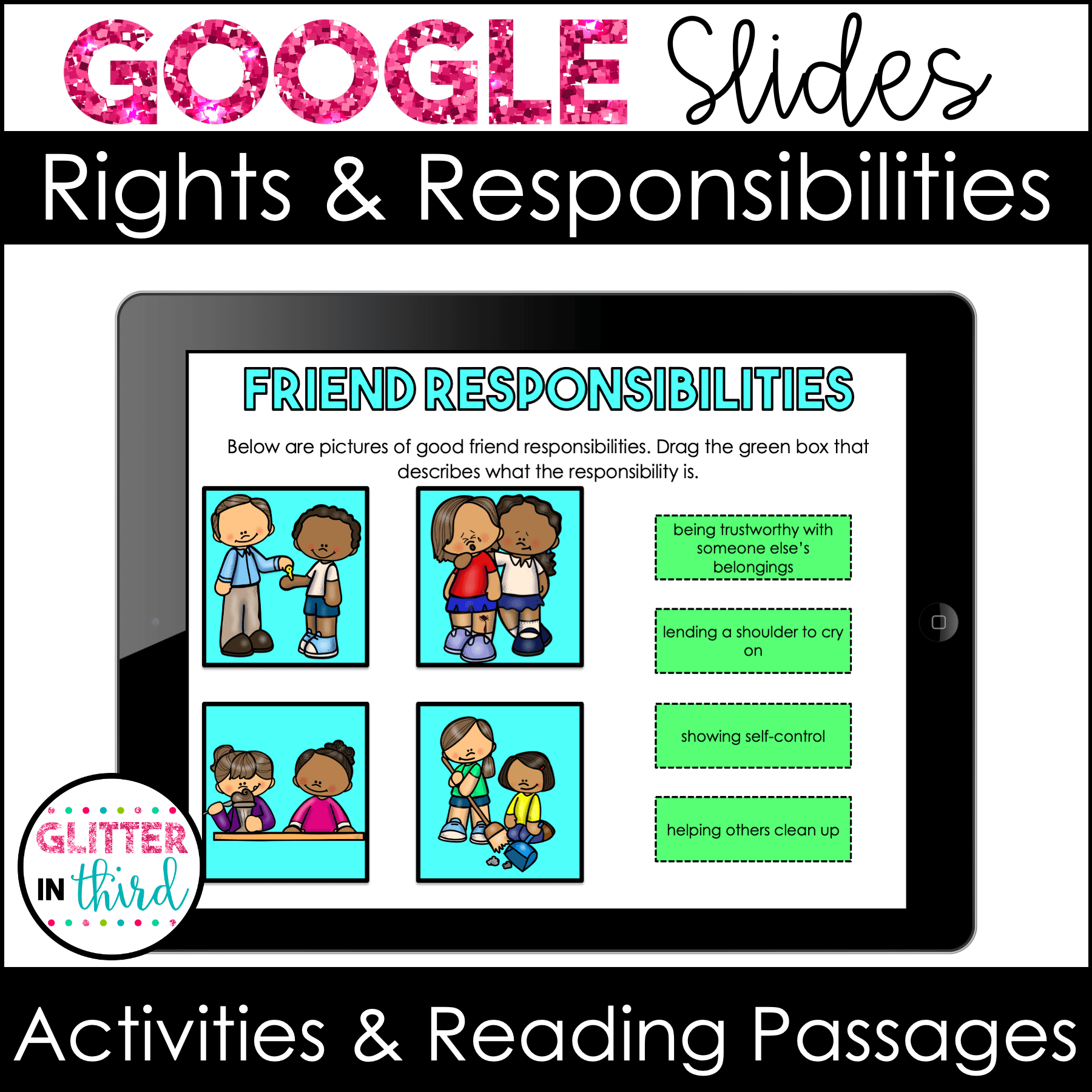
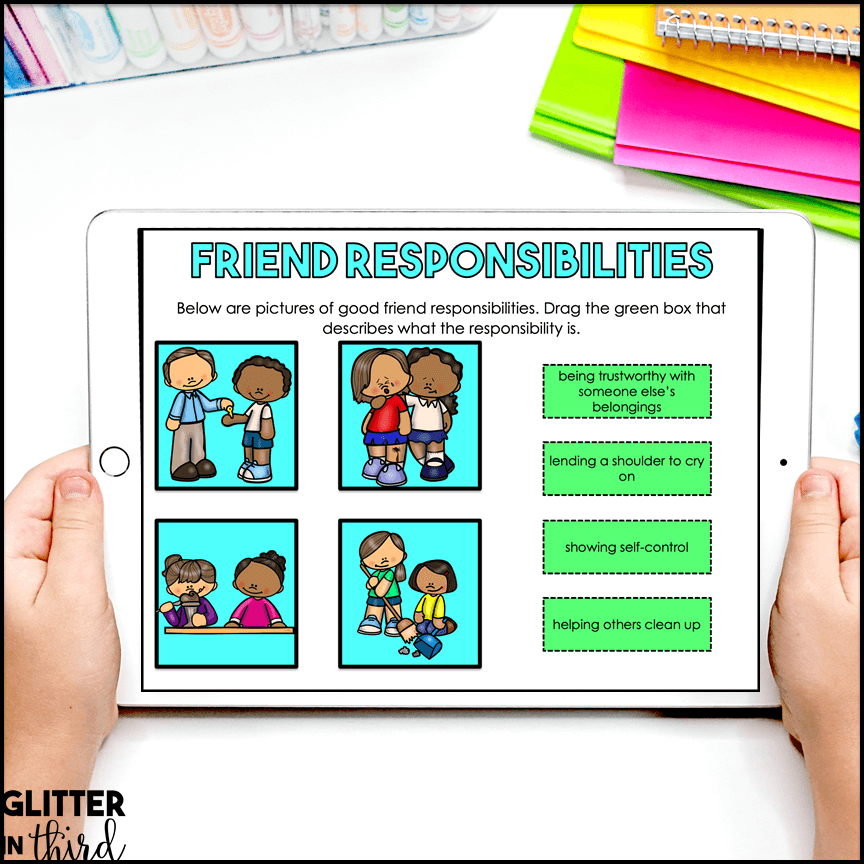
- Drag-&-drop: identify each friend responsibility picture
Responsibilities
- Drag-&-drop: identify the ways we can serve our community, state, and nation
- Drag-&-drop: finish the paragraph about the importance of voting
Basic rights
- Drag-&-drop: identify each basic rights picture (freedom of speech, freedom of assembly, freedom of religion, freedom of press)
- Drag-&-drop: match the vocabulary word to the fact (James Madison, the Constitution, Bill of Rights, First Amendment)
- Drag-&-drop: match the meaning to the inalienable right (life, liberty, pursuit of happiness)
What Do I Receive?
- A PDF containing a direct link to the Google Slides™ resource.
- An answer key to ensure quick and accurate grading.
Why do Teachers Love these Rights & Responsibilities Activities?
Time-Saving: Ready-to-use digital format—no prep needed!
Engaging: Drag-and-drop tasks, real-world scenarios, and reflection prompts keep students thinking critically.
Versatile: Easy to use with Google Classroom, Canvas, Schoology, Microsoft Teams, or even as a downloadable PowerPoint.
Standards-Aligned: Designed to support core civics and social studies objectives with age-appropriate content.
Why Will Your Students Love these Rights & Responsibilities Activities?
Interactive: Drag-and-drop slides and simple response prompts make learning feel like a game.
Relatable: Everyday examples help students connect big ideas to their own experiences.
Visual: Clean layouts and visuals make content easy to understand and engaging.
Thought-Provoking: Scenarios invite critical thinking, problem-solving, and real-world connections.
What Do I Need?
- Devices: Works seamlessly on laptops, Chromebooks, and iPads (Google Slides app recommended for iPads).
- Google Account: Access the activities easily with Google Slides.
What Standards Are Covered?
This resource covers the following 2nd Grade Virginia SOL Social Studies 2023 Standards:
2.1 The student will apply history and social science skills to distinguish between the rights and responsibilities that individuals have in the United States including, but not limited to
a. exercising freedom of expression;
b. exercising freedom of religion;
c. understanding equal protection;
d. voting for local, state, and national representatives;
e. respecting and following laws;
f. practicing honesty and trustworthiness; and
g. respecting the rights, beliefs, and opinions of others.
2.2 The student will apply history and social science skills to understand citizenship by
a. identifying the benefits of being a U.S. citizen; and
b. identifying the responsibilities of being a U.S. citizen.
This resource covers the following 3rd Grade Virginia SOL Social Studies 2023 Standards:
3.1 The student will apply history and social science skills to define citizenship and explain the rights and responsibilities of United States citizenship by
a. recognizing that Americans are people of diverse ethnic origins, customs, and traditions that are united by the basic principles of a republican form of government and respect for individual rights and freedoms;
b. describing the rights guaranteed to citizens in the First Amendment;
c. understanding the importance of supporting and defending the Constitution of the United States and the Bill of Rights;
d. respecting and following local, state, and federal laws;
e. taking part in the voting process when making classroom decisions;
f. running for elected office;
g. serving on a jury;
h. paying local, state, and federal taxes;
i. describing the purpose of rules; and
j. understanding responsible digital citizenship.
These citizenship activities give students the tools to think critically about how they participate in their communities and why their rights and responsibilities matter. With tasks focused on voting, inalienable rights, and basic freedoms, this resource builds a strong foundation in both civics content and character education. Whether you’re teaching about the Constitution or building classroom culture, this resource makes the big ideas of citizenship feel personal, practical, and powerful.



 Reload document
  Open in new tab
Reviews
There are no reviews yet.